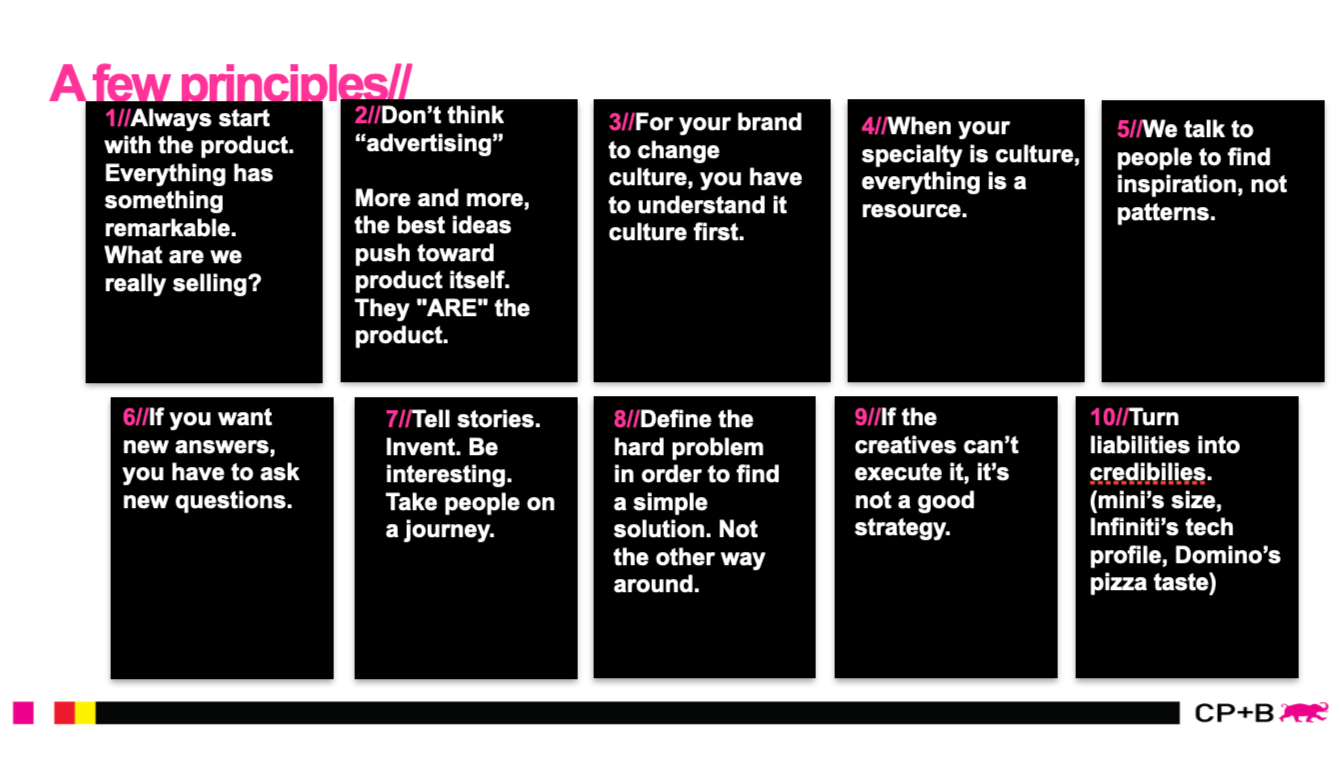
I joined CP+B London in 2014. Excited By the prospect of being part of what was once the most creatively awarded agency in the world
Was.
By the time I arrived, the thing that made it special was already fading. The name was still there. The case studies in the pitch decks. Even some of the brilliant people. But the institutional memory, the thing that let them do impossible work, was being quietly traded for process optimization and also, not so quietly, attempting to actually pay their bills
I spent three years watching their light slowly dim in real time.
What nobody admits: we didn't just cut costs. We performed surgery on ourselves and removed the bit that remembered why we mattered.
The senior people who got sacked weren't expensive dead weight. They were the living library of what actually worked. The ones who could read culture, spot patterns others missed, and had the irrational confidence to be wrong in interesting ways.
We replaced them with people brilliant at optimizing Tuesday's Instagram carousel. Nothing wrong with that skill. Except AI can now do it faster and cheaper than any of us.
Turns out we engineered agencies into precisely the shape that machines can replace.
The agencies still standing aren't trying to rebuild what was lost. They can't. You can rebuild offices, hire talent, even win pitches. But you cannot rebuild culture.
What might work instead? Treating this moment the way I treated redundancy at 60. Not as an ending, but as permission to ask uncomfortable questions. Like: what drives you to keep doing this work, even when the world suggests you shouldn't?
The agencies that survive won't be the ones clinging to the old cathedral. They'll be the ones comfortable not knowing what an agency should even look like anymore.
My zigzag career taught me something accidentally useful: comfort with discomfort. The ability to rebuild from rubble without losing curiosity.
Maybe that's the institutional knowledge we actually need now.
We spent two decades making ourselves cheaper to run. Then acted genuinely shocked when we got replaced by something cheaper still.
The dark arts the author mentions? Cultural intuition, taste, understanding why humans do illogical things? Those only thrive in environments that tolerate expensive, bloody-minded thinking.
Some callings don't respect business models.
Turns out creativity is one of them.
